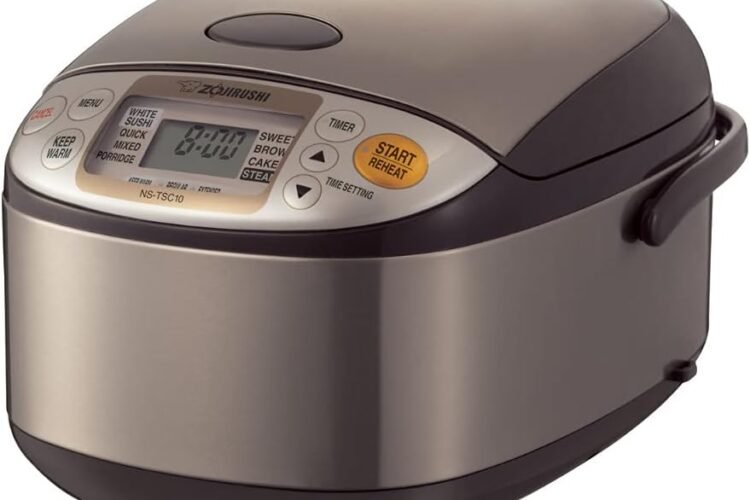
A rice cooker is one of those kitchen appliances that quietly earns its place on the counter. It does one job with remarkable consistency. For anyone who cooks rice regularly, it removes the guesswork entirely.
How a Rice Cooker Works
At its core, a rice cooker uses a heating element and a thermostat to cook rice without manual monitoring. The bowl contains rice and water; once the water is absorbed and the temperature rises above 100°C, the cooker switches to keep-warm mode automatically. More advanced models use fuzzy logic or induction heating to make micro-adjustments during cooking, producing more evenly cooked rice across different grain types.
Types of Rice Cookers
Basic On/Off Models
These use a simple bimetallic thermostat. When the temperature rises above the boiling point of water — indicating all water has been absorbed — the cooker flips from cook to warm. Affordable, durable, and adequate for white rice.
Fuzzy Logic Cookers
Fuzzy logic models use microchip-controlled algorithms to adjust cooking time, temperature, and pressure in real time. They handle a wider variety of rice types — short-grain, long-grain, brown, porridge, and mixed grains — and consistently produce better texture.
Induction Heating (IH) Models
IH cookers heat the entire inner pot magnetically rather than just the bottom. This produces more even heat distribution and superior texture, particularly for Japanese short-grain rice. They are the most expensive category but consistently produce professional-quality results.
Pressure Rice Cookers
These use pressurized cooking to achieve higher temperatures and shorter cook times. Particularly good at cooking brown rice quickly and producing exceptionally soft white rice.
Key Features to Consider
Capacity
Rice cookers are sized by cups of dry rice. A 3-cup cooker suits 1-2 people; a 5-6 cup model works better for families. Note that the included measuring cup is usually 180ml, not a standard 240ml US cup.
Inner Pot Material
Nonstick aluminum pots are standard and easy to clean. Higher-end models use multi-layer, ceramic-coated, or stainless steel pots that are more durable and produce different texture results.
Keep-Warm Function
Most rice cookers include keep-warm mode that holds rice at around 65-70°C for several hours. Some models have an extended keep-warm setting for longer periods.
Timer/Delay Start
A delay timer lets you add rice and water before leaving, with the cooker set to start so rice is ready when you arrive home.
Steam Tray
Many rice cookers include a steam tray that sits above the rice, allowing you to steam vegetables or fish simultaneously.
Rice Types and Settings
White short-grain, long-grain, jasmine, basmati, brown, sushi, porridge, and mixed grain all benefit from different water ratios and cooking times. Basic cookers handle white rice well. Fuzzy logic and IH models typically have dedicated settings for each type.
Cleaning and Maintenance
The inner pot is usually removable and dishwasher safe. The lid and steam vent should be rinsed after each use to prevent buildup. Rice cookers require minimal maintenance compared to stovetop cooking.
What to Look For
For most households, a fuzzy logic cooker in the 5-6 cup range represents the best balance of versatility and quality. If you eat primarily white rice, a basic model will serve you well at lower cost. If you cook multiple grain types or want restaurant-quality results, consider an IH or pressure model.
Look for a model with a solid inner pot warranty, a detachable power cord for easy serving, and a steam vent that is easy to clean.
Summary
A rice cooker makes rice effortless and consistent. Understanding the difference between basic, fuzzy logic, and IH models helps you choose the right one for your cooking habits and budget.
You can check more details and current options on Amazon here.