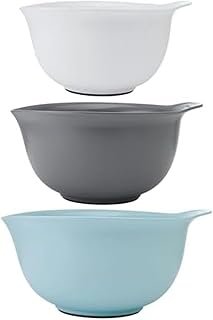
Mixing bowls are among the most used items in any kitchen. The right set covers everything from whisking eggs to folding cake batter to marinating proteins. Material, size range, and construction details make a significant difference in everyday use.
Materials
Stainless Steel
Stainless steel mixing bowls are lightweight, virtually indestructible, and easy to clean. They do not absorb flavors or odors and do not react with acidic ingredients. Not suitable for microwave use but can be nested over ice water for temperature-sensitive preparations.
Glass
Glass bowls are microwave safe, easy to see through, and non-reactive. They are heavier than stainless and will break if dropped. A tempered glass set like Pyrex is significantly more resistant to thermal shock.
Ceramic
Ceramic bowls are heavier, beautiful for table presentation, and retain temperature well. Often microwave and oven safe. The weight is a practical drawback for heavy mixing tasks.
Plastic
BPA-free plastic bowls are lightweight, inexpensive, and often come with lids for storage. They can retain odors over time and are more prone to scratching.
Size Range
A practical set covers small (0.5-1 quart) to large (5-8 quart) sizes. Small bowls are for whisking eggs, making dressings, or mixing spices. Medium bowls (2-3 quart) handle batters, salads, and marinades. Large bowls (5+ quarts) accommodate bread dough, large batches of cookie dough, and tossing pasta.
Key Design Details
Non-Slip Base
A rubberized or silicone ring on the base prevents the bowl from sliding on the counter during vigorous mixing. This is a genuinely useful feature — a standard rounded metal base can be frustrating when you need both hands free.
Pouring Spout
A rolled or angled pouring spout makes it easier to pour batter into pans without dripping. Particularly useful for pancake batter, cake batter, and liquid mixtures.
Measurement Markings
Interior measurement markings are convenient when a recipe calls for specific volumes of mixed ingredients. Not essential, but a useful addition in glass or stainless sets.
Cleaning
Stainless steel and glass bowls are dishwasher safe. Ceramic bowls are usually dishwasher safe — check the specific product. Plastic bowls may discolor or warp with repeated dishwasher exposure.
What to Look For
A stainless steel set with a non-slip ring, a useful size range covering at least small/medium/large, and a clean nesting profile is the most versatile choice. The KitchenAid stainless steel mixing bowl set is a popular and well-regarded option. For those who frequently use the microwave for mixing preparations, a glass set is the better choice.
Summary
Mixing bowls are a daily kitchen staple where material, size range, and design details define practical value. A well-chosen set in the right material for your cooking style will last years and improve the workflow of almost every meal preparation task.
You can check more details and current options on Amazon here.