Sous vide cooking uses precise temperature control to cook food sealed in a bag, submerged in a water bath, to an exact internal temperature. The result is food cooked to a level of consistency that no other method can replicate.
How Sous Vide Works
Food is sealed in a bag with minimal air, then submerged in a water bath held at the target internal temperature. Because the water temperature equals the target food temperature, it is physically impossible to overcook the food beyond that point. The precision cooker (immersion circulator) clamps to the side of a pot, heats the water to the set temperature, and circulates it continuously to ensure uniformity. Most home-oriented precision cookers hold temperature within 0.1-0.2°C.
What Sous Vide Does Well
Proteins
Steak cooked sous vide at 54°C (130°F) for 1-4 hours is medium-rare edge-to-edge with no grey band. Chicken breast at 63°C (145°F) for 1.5 hours is consistently tender, juicy, and safe. Fish at 50-55°C produces texture impossible to achieve by any other method.
Eggs
Eggs cooked at 63-65°C for 45-60 minutes produce a unique texture — whites just barely set, yolks creamy and custard-like. This is the sous vide egg familiar from many restaurants.
Vegetables
Vegetables can be sous vide cooked, though the benefit is less dramatic than with proteins. Root vegetables cooked in butter sous vide absorb flavor exceptionally well.
What Sous Vide Does Not Do
Sous vide does not produce browning. After sous vide cooking, proteins are typically seared quickly in a very hot pan, on a grill, or with a culinary torch to develop color and crust.
Key Specifications
Temperature Range and Accuracy
Most home precision cookers cover 0-92°C (32-197°F) with accuracy to 0.1°C. Accuracy is more important than range.
Wattage and Heating Speed
Higher wattage (1000-1200W) means the device heats the water bath faster. Larger containers take longer to reach temperature with lower-wattage devices.
Clamp Design
The clamp should be adjustable to fit containers of different thicknesses and should hold securely without shifting during long cook times. A loose clamp is a safety issue.
Connectivity
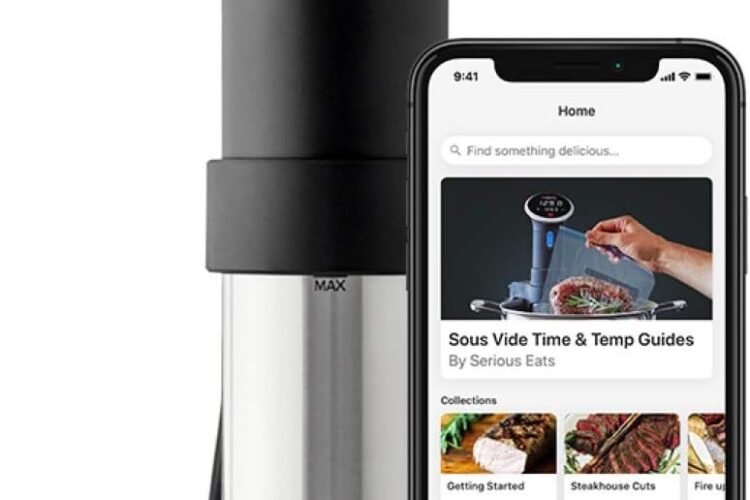
Some models include smartphone connectivity for remote monitoring. Convenient for long cooks (e.g., a 24-hour short rib) where you want to check temperature without being in the kitchen.
Required Equipment
Beyond the precision cooker, you need: a large container; food-grade bags (heavy-duty zip-lock bags work for shorter cooks; proper vacuum sealer bags are better for longer ones); and a vacuum sealer or the water displacement method to remove air from bags.
Safety Considerations
Sous vide cooking at temperatures below 60°C requires attention to food safety guidelines. Following established time/temperature tables from reputable sources is important.
What to Look For
For home cooks, a 1000-1200W precision cooker with accurate temperature control, a good clamp, and a quiet motor is all that is needed. A separate container rather than a standard pot improves efficiency for longer cooks.
Summary
A sous vide precision cooker achieves precise protein doneness that no other method can match. Understanding what it does well helps you decide whether it fits your cooking style.
You can check more details and current options on Amazon here.