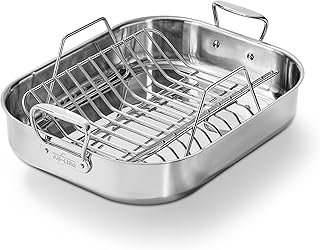
A roasting pan is a large, heavy-duty pan designed to handle roasts, whole poultry, and vegetables in a high-heat oven. It also collects pan drippings — the foundation of gravies and sauces. Choosing the right one makes a significant difference in the quality of your roasts.
What a Roasting Pan Does
A roasting pan holds large cuts of meat or whole birds above the pan floor (when used with a rack) to allow hot air to circulate underneath. It catches drippings, keeps juices from burning off, and allows you to baste meat during cooking. After roasting, the pan goes directly on the stovetop to deglaze and make pan sauce or gravy.
Materials
Stainless Steel
Stainless steel roasting pans are durable, attractive, and compatible with all cooktops including induction. They do not react with acidic ingredients. Fully clad stainless (with aluminum core layers) addresses heat distribution. Easy to clean and maintains appearance over time.
Enameled Steel
Enameled steel pans are affordable and non-reactive. They heat quickly due to the steel base and are easy to clean. The enamel coating can chip if treated roughly.
Enameled Cast Iron
Cast iron roasting pans retain heat exceptionally well and are ideal for low-and-slow roasting. They are very heavy and expensive, but transition beautifully from oven to table.
Hard-Anodized Aluminum
Anodized aluminum roasting pans heat quickly and evenly. They are lightweight relative to their size — a significant practical advantage. They do not react with acidic drippings.
Rack Inclusion
Most roasting pans come with a V-rack or flat rack. A V-rack cradles a whole bird or roast securely and lifts it clear of the pan floor. A flat rack is more versatile for different cut shapes. Look for a rack that is sturdy enough not to flex under a heavy bird.
Size
A 16×13-inch pan handles a 20-pound turkey. For everyday roasting of chickens (4-6 lbs) and smaller beef roasts, a 14×10-inch pan is more practical and easier to maneuver.
Handles
A large, hot roasting pan loaded with a turkey is genuinely dangerous. Handles must be robust, securely riveted, and large enough to grip with oven mitts. Do not compromise on this feature.
Stovetop Compatibility
If you plan to make pan sauce directly in the roasting pan, verify that the pan is compatible with your cooktop type. Induction compatibility requires a magnetic base.
What to Look For
For most home cooks, a 14-16 inch stainless steel or hard-anodized aluminum roasting pan with sturdy riveted handles and a good rack covers all roasting needs. Prioritize handle quality and overall rigidity — the pan should not flex when lifted with a full load.
Summary
A roasting pan earns its place during holidays and whenever you cook large cuts of meat. Material, size, rack quality, and handle construction are the most important factors. A well-chosen roasting pan maintained properly will last decades.
You can check more details and current options on Amazon here.