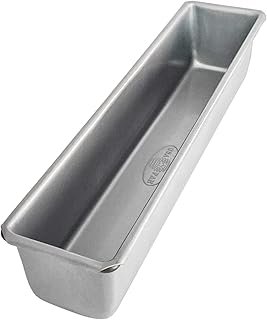
A loaf pan is one of the most useful pieces of bakeware you can own. It produces bread, pound cake, banana bread, meatloaf, and more. Choosing the right one depends on understanding material, size, and construction.
Standard Loaf Pan Sizes
The two most common sizes are 9×5-inch and 8.5×4.5-inch loaf pans. The 9×5 is larger and produces a wider loaf with a flatter top. The 8.5×4.5 produces a more domed loaf. Most standard recipes specify one or the other, so having both sizes avoids guesswork.
Mini loaf pans (around 5.75×3 inches) are useful for gift loaves and single-serving portions.
Materials
Aluminized Steel
The most widely used material. Aluminized steel heats quickly, conducts evenly, and produces consistent browning. It is the standard in professional bakeware and is durable enough for daily use when treated correctly.
Aluminum
Pure aluminum heats very evenly and produces excellent results. Hard-anodized aluminum is more scratch-resistant and does not react with acidic batters.
Nonstick-Coated
Nonstick coatings make release and cleanup significantly easier. Quality matters — look for multiple layers and a heavy-gauge base beneath the coating.
Glass
Glass loaf pans conduct heat more slowly than metal. Recipes often need adjustment when switching from metal to glass — typically lower temperature and longer bake time.
Ceramic
Ceramic loaf pans retain heat very well and are easy to clean, but they heat slowly and are more prone to cracking under sudden temperature changes.
Construction Quality
A well-made loaf pan should have straight, even walls with no buckling. The rim should be reinforced to prevent warping. The base should feel solid, not thin or flimsy.
Color
Lighter colored pans reflect more heat and produce lighter crusts. Darker pans absorb more heat and produce deeper browning. For artisan bread, a darker pan or one without a reflective coating is preferable. For pound cake and banana bread, lighter pans avoid over-browning the edges.
Cleaning and Care
Even nonstick loaf pans benefit from hand washing. Grease residue from breads and cakes can build up over time — washing promptly after use helps. Avoid metal scrapers on nonstick surfaces.
What to Look For
A 9×5-inch aluminized steel pan with a nonstick coating and reinforced rim covers most home baking needs. If you bake artisan breads where crust matters, a bare aluminum or steel pan without coating produces better results.
Summary
The right loaf pan depends on what you bake and how often. Material, size, color, and construction all affect the final result. A well-chosen loaf pan is a one-time investment that pays off with consistent, well-browned results across hundreds of bakes.
You can check more details and current options on Amazon here.